
Free(-ish) Mental Health Treatment

Free(-ish) mental health treatment
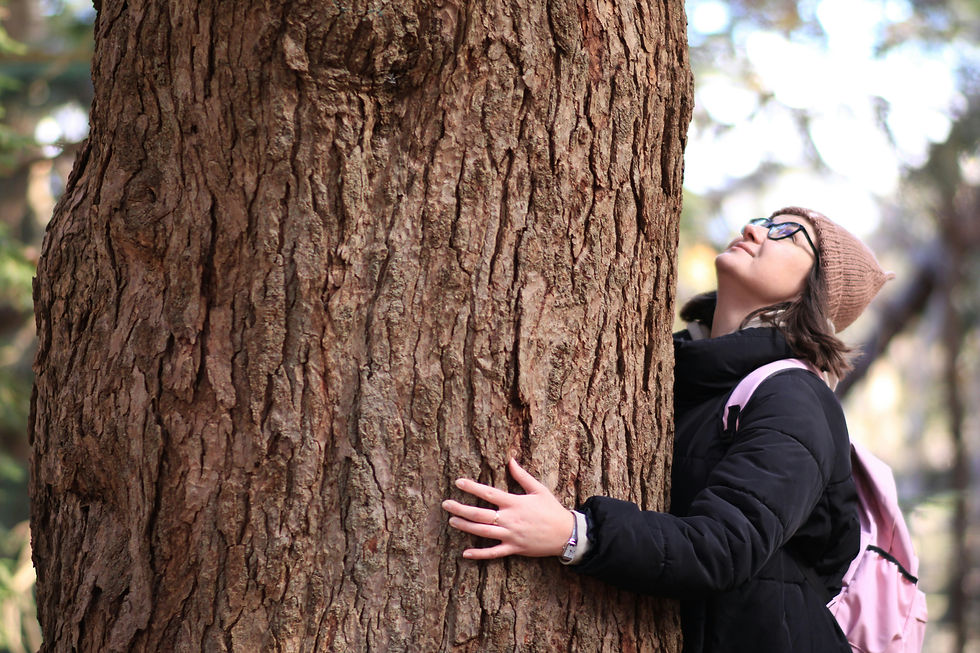
So, how in the heck does painting help get rid of my anxiety? And you’re saying hugging a tree will help me feel better if I’m depressed? Talking to my friends and spending time with them is actually going to help me regulate my nervous system? You’re seriously telling me that taking breaks is a solution to my problems? And I actually really need to exercise?
I’m sure you’ve heard some of these solutions before when it comes to treating your anxiety, depression, bipolar disorder, PTSD, or healing from trauma. It sounds crazy, but it’s actually true. Can you believe it? The science behind it is surprisingly strong.
Spending time in nature is naturally self-soothing, and it helps regulate our nervous system. The bilateral movement of taking a walk can actually soothe us, help repair the effects of stress, and reduce cortisol levels.
Talking with friends and simply spending time with them and having fun is a huge protective factor. In fact, having strong relationships is one of the biggest protective factors when it comes to our mental health.
Did you know that getting into a flow state while being creative has actually been shown to be super effective in reducing stress, anxiety, and nervous system dysregulation? Researchers have actually measured this.
There are ways to support your mental health without going to therapy. It’s true. Is it enough? I don’t know, but it’s a start. If you feel that you can’t afford therapy or don’t have time for therapy, there are some small steps you can take. And if you are in therapy, there are lots of different techniques and lifestyle changes that can help improve your mental health to accentuate therapy.
And yes, it’s absolutely true—exercise does help tremendously. In fact, just 20 minutes of elevated heart rate three days a week can have powerful effects on mood and mental health.
So here’s your challenge: Go do some artwork. Spend time with some friends. Walk outside in nature. Hug a tree. Go for a run. Do those exercises. All of these things together can help create a force field around your mental health.
Maybe your nervous system doesn’t need another self-help book. Maybe it needs a friend. Maybe it needs a paintbrush. Or maybe it needs therapy too. If you want to find out more about anxiety therapy, give us a call. We would love to help you on your journey and coach you through all of these fabulous interventions that you can do for free-ish.
Looking for online therapy in Maryland? SoCo Counseling offers online counseling in Maryland for anxiety, depression, trauma, stress, parenting concerns, teen mental health, relationship issues, and life transitions. Our Maryland therapists provide convenient telehealth therapy so you can get support from home. We serve clients throughout Maryland, including Annapolis, Anne Arundel County, Southern Maryland, Calvert County, and surrounding areas.
Jiménez, M. P., Kaiser, F. G., & Iyer, A. (2021). Associations between nature exposure and health: A review of empirical studies. PMC. https://www.ncbi.nlm.nih.gov/pmc/articles/PMC8125471/
Twohig-Bennett, C., & Jones, A. (2018). The health benefits of the great outdoors: A systematic review and meta-analysis of greenspace exposure and health outcomes. Environmental Research, 166, 628–637. https://doi.org/10.1016/j.envres.2018.06.030
Umberson, D., & Hughes, M. E. (2010). Social relationships and health: A flashpoint for health policy. Journal of Health and Social Behavior, 51(S), S54–S66.
Pearce, E., Craddock, N., Watkins, A., & Holmes, P. (2023). Associations between constructs related to social relationships and mental health conditions and symptoms: An umbrella review. BMC Psychiatry, 23, 114. https://doi.org/10.1186/s12888-023-05069-0
Tan, C. Y. (2021). Being creative makes you happier: The positive effect of creativity on subjective well-being. Frontiers in Psychology, 12, Article 619191. https://doi.org/10.3389/fpsyg.2021.619191
Kaimal, G., Carr, E., & Russell, M. (2016). Reduction of cortisol levels and participants’ responses following art making. Art Therapy, 33(2), 74–80. https://doi.org/10.1080/07421656.2016.1166832
Basso, J. C., & Suzuki, W. A. (2017). The effects of acute exercise on mood, cognition, neurophysiology, and neurochemical pathways: A review. Brain Plasticity, 2(2), 127–152. https://doi.org/10.3233/BPL-160035
Pahlavani, H. A. (2024). Possible role of exercise therapy on depression: A narrative review focusing on neurotransmitters. Neuroscience & Biobehavioral Reviews. Advance online publication. https://doi.org/10.1016/j.neubiorev.2024.105920
Albulescu, P., & Sulea, C. (2022). “Give me a break!” A systematic review and meta-analysis on the efficacy of micro-breaks in enhancing well-being and performance. Psychological Reports, 125(4), 2579–2606. https://doi.org/10.1177/00332941211070150
Packer, J. (2021). Taking a break: Exploring the restorative benefits of short breaks and vacations. Annals of Tourism Research Empirical Insights, 2(1), 100006. https://doi.org/10.1016/j.annale.2020.100006


Comments